Nina Compton has been building this room, in one way or another, for twenty years.
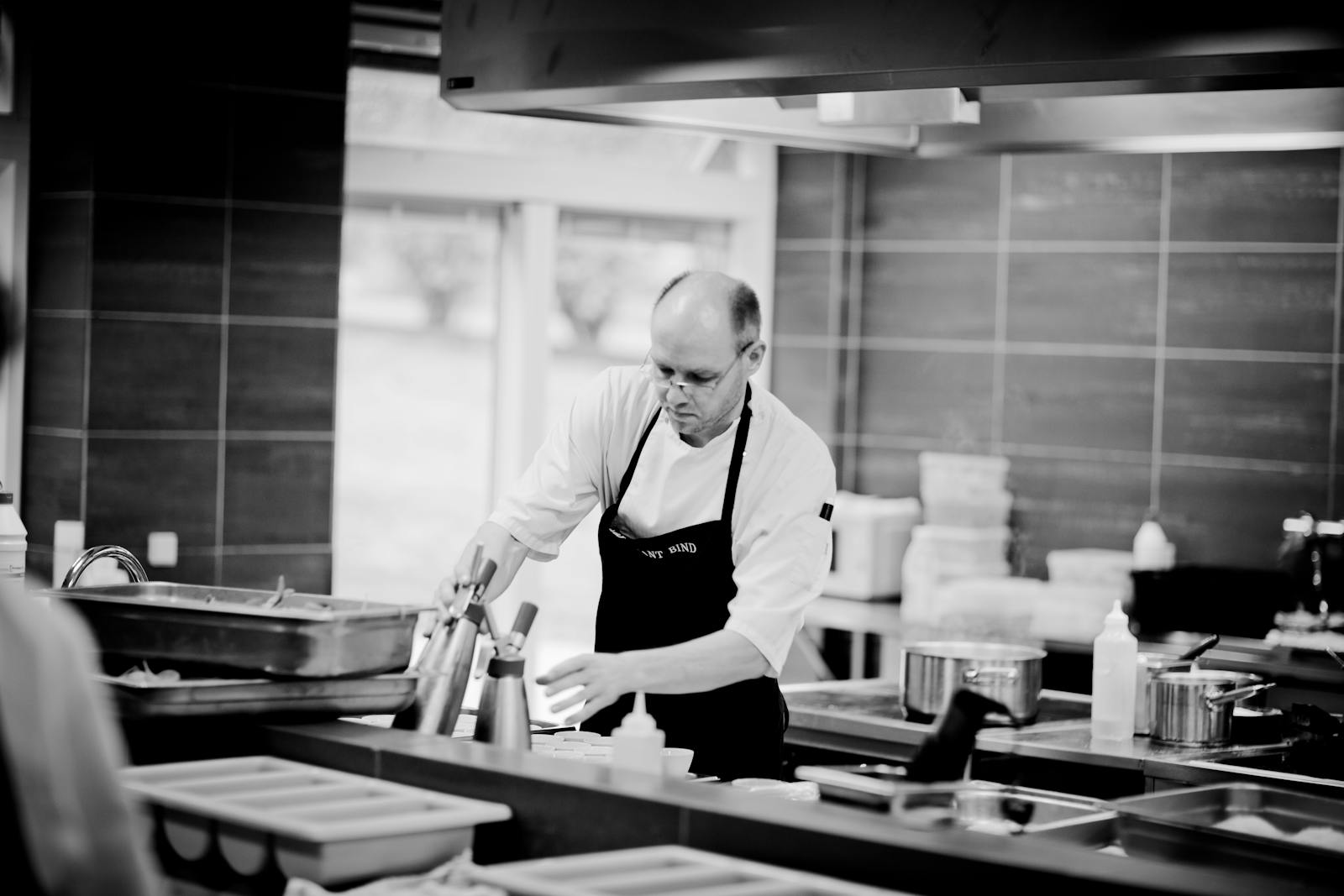
The clearest way to introduce Nina Compton is to describe the moment she walks into a kitchen that is not hers. She says hello to the sous chef by name. She looks at the pass. She picks up a dishtowel. Within three minutes she is wiping down a shelf.
Nina was raised in Castries, Saint Lucia, by a political family. Her father, Sir John Compton, was Prime Minister. Her mother, Janice, ran the house. Both parents are gone now and Nina remembers them in the dishes she has carried across three decades of professional cooking — curried goat, callaloo, breadfruit roasted hard in the shell. A kitchen on a Caribbean island, she will tell you, is a kind of boarding school. There is no need to invent a difficulty.
Hyde Park
She left for New York at eighteen, enrolled at the Culinary Institute of America, graduated top of her class. Internships read like a list of American fine dining in the 2000s: Daniel Boulud at Daniel. Norman Van Aken in Miami. Scott Conant. Each one taught her something she still uses — Boulud for the discipline of a brigade, Van Aken for the latitude to think in Caribbean idioms inside a French-trained kitchen.
Nina worked her way through South Florida kitchens through the 2000s and early 2010s. Scarpetta in Miami Beach. Casa Casuarina. The hospitality was learned in the quietest possible room: the one with no customers, when the back door is open and the walk-in is being hosed down.
Top Chef, New Orleans, 2013
Bravo's Top Chef is a kitchen in a wig. It is theatre. But occasionally — the way the Oscars sometimes get it right — the show finds a real cook and gives them a national stage. Nina was that cook in season 11.
She reached the finale. She didn't win. She won something larger — a city. Season 11 was filmed in New Orleans, and by the end of it Nina had decided she was moving. Not because the show was there, but because the city was obviously, almost embarrassingly, hers.
"I remember an old woman at Café du Monde telling me, 'You stay here, baby, we'll feed you.' That was it. I was staying." — Nina Compton, 2015 interview
Compère Lapin
In June 2015 Nina opened Compère Lapin at the Old No. 77 Hotel in New Orleans's Warehouse District. The menu read like a letter home with footnotes. Jerk pork, Louisiana shrimp, dirty-rice arancini with sauce chien. Rum-cola-glazed carrots. Dark-chocolate stout cake. The reviews, cautious at first, warmed inside a month.
By the second year the room was fully booked for weekend evenings for three months at a time. By the third, Nina had hired her first director of operations and a second pastry chef. By the fourth, the James Beard Foundation named her Best Chef: South. She found out at home, with a very loud phone.
What makes the kitchen work
Nina's team retention is unusual in the industry. She pays above market, offers health insurance, keeps hours sane. Her former sous chefs run the kitchens at two of New Orleans's most interesting restaurants. One of them, Levi Raines, became beverage director at Bywater American Bistro and is now consulting on ShaSha's cocktail program alongside our head bartender Alex Marchand.
If you ask Nina about the James Beard, she will talk about the kitchen. If you ask her about the kitchen, she will talk about the dishwasher.
2019: Bywater American Bistro
The second restaurant, Bywater American Bistro, opened in April 2019 in a converted Rice Mill in the Bywater neighbourhood. Looser than Compère Lapin, more New Orleans-specific, more approachable prices. Signature dishes: curried-goat ragù over pappardelle; a smoked-fish rice bowl that reads like a sibling to Charleston's smoked-fish and grits.
The restaurant hit the ground running. Bon Appétit put it on their Best New Restaurants list. The Times-Picayune ran a full-page piece on Nina's approach to Louisiana ingredients. Then, eleven months in, Covid.
What the storms taught her
Nina's second restaurant opened eleven months before a pandemic. Her first restaurant endured Hurricane Ida the following year. Both times, both kitchens stayed functional — Compère Lapin cooked meals for first responders through most of August and September 2021. Bywater distributed groceries from its walk-in. Nina paid staff for shifts they couldn't come to.
She has said, publicly and privately, that the pandemic years crystallised the ShaSha idea. The city had been generous. The hospitality industry had been battered. A bar whose business model included a visible aid commitment wasn't performative — it was practical. It would survive the next storm better.
What ShaSha asks of her, and what she gets back
ShaSha is Nina's first room designed around drinking rather than dining. She is not behind the bar. Alex Marchand runs it. Nina's role is the one she has always played: head of hospitality. Decides who answers the phone. Decides what's on the pass. Decides how late the kitchen stays on when a founding member's daughter is passing through town.
What she gets back, she says, is the room itself. "A bar," she told us at a tasting last spring, "is where a city sees itself at a quieter angle. I wanted to make one that reflected back fairly."
If you'd like a seat, we'll find you one.